

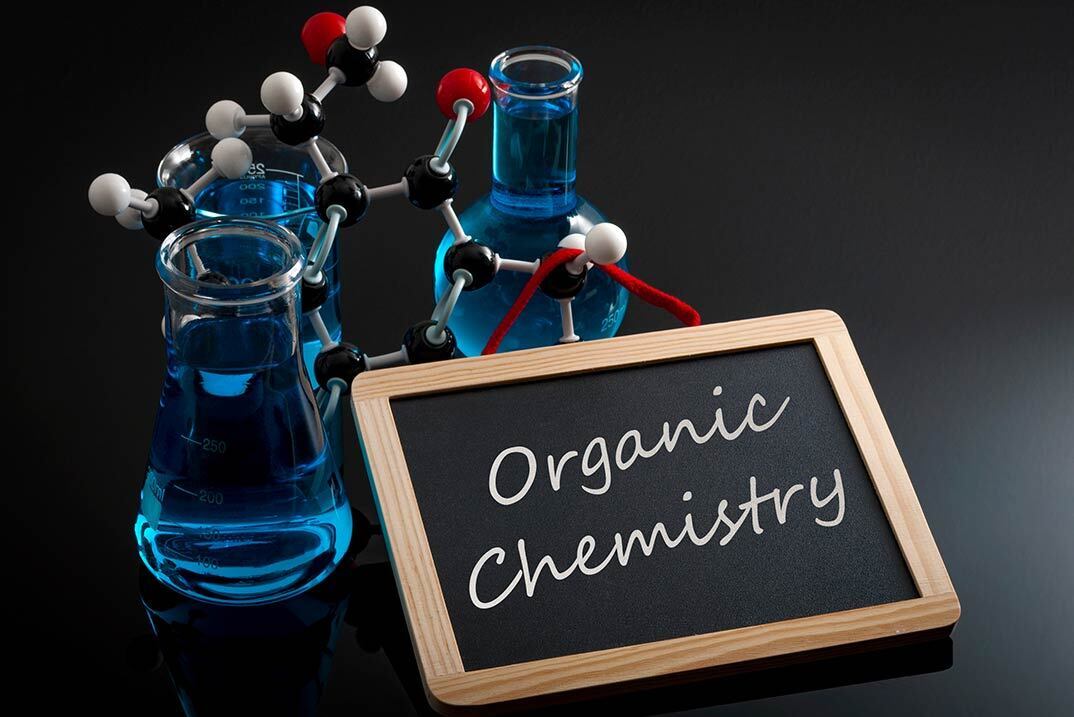
Struggling to understand complex chemical reactions, molecular structures, or organic compounds? Organic chemistry is often considered one of the most challenging areas of science, and many learners in the UK find it difficult to grasp concepts such as reaction mechanisms, functional groups, and chemical bonding without structured guidance.

In the UK, organic chemistry plays a critical role in fields such as healthcare, pharmaceuticals, laboratory science, and chemical industries. A solid understanding of organic chemistry is essential for students, lab technicians, and professionals working in science-related roles.

This Organic Chemistry course online UK provides a structured introduction to the fundamentals of organic chemistry, including hydrocarbons, functional groups, reaction mechanisms, and chemical structures. You will explore how organic compounds behave, how reactions occur, and how these principles apply in real-world scientific and industrial contexts.

Designed for flexible, self-paced learning, this course allows you to study at your own pace while achieving a CPD-accredited certificate recognised across the UK. Whether you are a student, aspiring lab technician, or science professional, this course offers a clear pathway to understanding organic chemistry concepts with confidence.

Course Overview

This CPD-accredited course provides a comprehensive introduction to organic chemistry principles and applications.

What This Course Covers:

  • Introduction to organic chemistry and its importance
  • Structure of organic molecules and chemical bonding
  • Hydrocarbons and their properties
  • Functional groups and classification of compounds
  • Naming organic compounds (basic nomenclature)
  • Reaction mechanisms and chemical reactions
  • Isomerism and stereochemistry basics
  • Organic chemistry problem-solving techniques
  • Applications in healthcare, pharmaceuticals, and industry
  • Practical exercises and conceptual understanding

This course reflects the growing demand for organic chemistry knowledge in UK education and science-based careers.

By the end of this CPD-accredited course, you will be able to:

  • Understand the principles of organic chemistry and carbon-based compounds
  • Identify different types of organic molecules and functional groups
  • Explain basic reaction mechanisms and chemical processes
  • Apply organic chemistry concepts to real-world applications
  • Understand hydrocarbons and their chemical behaviour
  • Recognise isomerism and stereochemistry fundamentals
  • Develop problem-solving skills in organic chemistry
  • Improve analytical and scientific reasoning abilities
  • Build confidence in studying and applying chemistry concepts

Enhance your profile with a CPD-accredited certificate

By enrolling, you will:

  • Gain a CPD-accredited Organic Chemistry certificate recognised in the UK
  • Develop a clear understanding of complex organic chemistry concepts
  • Study online at your own pace, suitable for students and professionals
  • Improve academic performance and scientific knowledge
  • Build skills relevant to laboratory, healthcare, and science careers
  • Strengthen analytical thinking and problem-solving abilities
  • Create a strong foundation for further study in chemistry and related fields

This course is ideal for learners seeking a structured and accessible approach to mastering organic chemistry fundamentals.

This course is suitable for:

  • Students studying chemistry, biology, or science subjects
  • Beginners interested in learning organic chemistry
  • Laboratory technicians and science professionals
  • Healthcare and pharmacy learners
  • Individuals preparing for further scientific study
  • Anyone seeking CPD-accredited science training

Role

Application

UK Salary

Laboratory Technician

Conducting chemical analysis and experiments

£22,000 – £35,000

Pharmacy Assistant

Supporting pharmaceutical processes and compounds

£20,000 – £30,000

Chemical Analyst

Analysing chemical substances and reactions

£25,000 – £40,000

Science Technician

Assisting in labs and research environments

£21,000 – £32,000

Healthcare Professional

Applying chemistry knowledge in medical contexts

£24,000 – £38,000

The assessment is straightforward; you need to complete the assignment questions that will be provided to you at the end of this  course, you can complete the assignment anytime you want. After you complete and submit your assignment, our tutors will assess your assignment and give you feedback if needed. 

After your assignment has been assessed and you have passed, you will be qualified and will be able to apply for a course completion certificate.

Upon completing the course and passing the final assessment, you will be eligible to receive a CPD QS Accredited Certificate from The Teachers Training, which demonstrates your professional knowledge and career readiness. You can select your preferred certificate option at discounted rates, with the Digital CPD Certificate (PDF) available for only £6.99, the Printed Hardcopy Certificate for only £9.99, or both the Digital and Printed Certificates together for just £11.99. This certification will significantly strengthen your CV and enhance your credibility within the education sector. Please note that discounted certificate pricing is available for a limited time only, so be sure to secure your certificate before the offer ends.

Organic Chemistry Course – CPD-Accredited Online Training UK

Struggling to understand complex chemical reactions, molecular structures, or organic compounds? Organic chemistry is often considered one of the most challenging areas of science, and many learners in the UK find it difficult to grasp concepts such as reaction mechanisms, functional groups, and chemical bonding without structured guidance.

In the UK, organic chemistry plays a critical role in fields such as healthcare, pharmaceuticals, laboratory science, and chemical industries. A solid understanding of organic chemistry is essential for students, lab technicians, and professionals working in science-related roles.

This Organic Chemistry course online UK provides a structured introduction to the fundamentals of organic chemistry, including hydrocarbons, functional groups, reaction mechanisms, and chemical structures. You will explore how organic compounds behave, how reactions occur, and how these principles apply in real-world scientific and industrial contexts.

Designed for flexible, self-paced learning, this course allows you to study at your own pace while achieving a CPD-accredited certificate recognised across the UK. Whether you are a student, aspiring lab technician, or science professional, this course offers a clear pathway to understanding organic chemistry concepts with confidence.

Course Overview

This CPD-accredited course provides a comprehensive introduction to organic chemistry principles and applications.

What This Course Covers:

  • Introduction to organic chemistry and its importance
  • Structure of organic molecules and chemical bonding
  • Hydrocarbons and their properties
  • Functional groups and classification of compounds
  • Naming organic compounds (basic nomenclature)
  • Reaction mechanisms and chemical reactions
  • Isomerism and stereochemistry basics
  • Organic chemistry problem-solving techniques
  • Applications in healthcare, pharmaceuticals, and industry
  • Practical exercises and conceptual understanding

This course reflects the growing demand for organic chemistry knowledge in UK education and science-based careers.

Learning Outcomes

By the end of this CPD-accredited course, you will be able to:

  • Understand the principles of organic chemistry and carbon-based compounds
  • Identify different types of organic molecules and functional groups
  • Explain basic reaction mechanisms and chemical processes
  • Apply organic chemistry concepts to real-world applications
  • Understand hydrocarbons and their chemical behaviour
  • Recognise isomerism and stereochemistry fundamentals
  • Develop problem-solving skills in organic chemistry
  • Improve analytical and scientific reasoning abilities
  • Build confidence in studying and applying chemistry concepts

Enhance your profile with a CPD-accredited certificate

Why Enrol in This Course?

By enrolling, you will:

  • Gain a CPD-accredited Organic Chemistry certificate recognised in the UK
  • Develop a clear understanding of complex organic chemistry concepts
  • Study online at your own pace, suitable for students and professionals
  • Improve academic performance and scientific knowledge
  • Build skills relevant to laboratory, healthcare, and science careers
  • Strengthen analytical thinking and problem-solving abilities
  • Create a strong foundation for further study in chemistry and related fields

This course is ideal for learners seeking a structured and accessible approach to mastering organic chemistry fundamentals.

Who Is This Course For?

This course is suitable for:

  • Students studying chemistry, biology, or science subjects
  • Beginners interested in learning organic chemistry
  • Laboratory technicians and science professionals
  • Healthcare and pharmacy learners
  • Individuals preparing for further scientific study
  • Anyone seeking CPD-accredited science training

Why Choose Teachers Training

Some of our website features are:

Entry Requirements

No formal entry requirements. You need to have:

Career Path

Role

Application

UK Salary

Laboratory Technician

Conducting chemical analysis and experiments

£22,000 – £35,000

Pharmacy Assistant

Supporting pharmaceutical processes and compounds

£20,000 – £30,000

Chemical Analyst

Analysing chemical substances and reactions

£25,000 – £40,000

Science Technician

Assisting in labs and research environments

£21,000 – £32,000

Healthcare Professional

Applying chemistry knowledge in medical contexts

£24,000 – £38,000

Assessment

The assessment is straightforward; you need to complete the assignment questions that will be provided to you at the end of this course. You can complete the assignment anytime you want. After you complete and submit your assignment, our tutors will assess your assignment and give you feedback if needed. 

After your assignment has been assessed and you have passed, you will be qualified and will be able to apply for a course completion certificate.

Certification

Upon completing the course and passing the final assessment, you will be eligible to receive a CPD QS Accredited Certificate from The Teachers Training, which demonstrates your professional knowledge and career readiness. You can select your preferred certificate option at discounted rates, with the Digital CPD Certificate (PDF) available for only £6.99, the Printed Hardcopy Certificate for only £9.99, or both the Digital and Printed Certificates together for just £11.99. This certification will significantly strengthen your CV and enhance your credibility within the education sector. Please note that discounted certificate pricing is available for a limited time only, so be sure to secure your certificate before the offer ends.

Schema Markup

Frequently Asked Questions

Organic chemistry is the study of carbon-based compounds, including their structure, properties, and reactions, widely used in science and industry.

Organic chemistry can be challenging, but with structured learning and practice, it becomes easier to understand key concepts and reactions.

Yes. This organic chemistry course online UK is fully self-paced and accessible for learners across the UK.

The basics include hydrocarbons, functional groups, bonding, reaction mechanisms, and molecular structures.

Yes. You will receive a CPD-accredited Organic Chemistry certificate upon successful completion.

Course Curriculum

Unit 01: About the Course
Introduction 00:02:00
Unit 02: Drawing Organic Molecules
How to read bond-line drawings 00:18:00
How to draw bond-line drawings 00:18:00
Identifying formal charges 00:22:00
Finding lone pairs that are not drawn 00:23:00
Unit 03: Resonance
What is resonance? 00:05:00
Drawing resonance structures (part 1) 00:40:00
Formal charges in resonance structures 00:19:00
Drawing resonance structures (part 2) 00:25:00
Recognizing patterns 00:30:00
The relative importance of resonance structures 00:19:00
Unit 04: Acid-Base Reactions
Introduction to acid – base 00:03:00
Charged atoms 00:08:00
Resonance 00:11:00
Induction 00:09:00
Orbitals 00:03:00
Charged atoms – Resonance – Induction – Orbitals 00:07:00
Showing an acid-base mechanism 00:14:00
Acid-Base equilibrium position 00:06:00
Unit 05: Geometry
Orbitals 00:15:00
Goemetry of orbitals 00:15:00
Impact of resonance on geometry 00:01:00
Unit 06: Nomenclature
Introduction to nomenclature 00:03:00
Functional group 00:07:00
Unsaturation 00:04:00
Parent 00:09:00
Substituents 00:10:00
“cis” – “trans” stereoisomerism 00:04:00
“E” – “Z” stereoisomerism 00:04:00
Localizing substituents in parent chain 00:12:00
From structure to name 00:20:00
Unit 07: Conformations
Introduction to conformations 00:02:00
Newman projection 00:10:00
Relative stability of Newman projections 00:08:00
Drawing chair conformations 00:02:00
Drawing substituents in chair conformations 00:12:00
Ring flipping 00:10:00
Comparing stability of chair conformations 00:10:00
Unit 08: Configurations
Introduction to configurations 00:01:00
Locating stereocenters 00:04:00
Determining the configuration of a stereocenter 00:18:00
Nomenclature 00:12:00
Enantiomers 00:08:00
Diastereomers 00:05:00
Meso compounds 00:04:00
Fischer projections 00:11:00
Unit 09: Mechanisms
Introduction to mechanisms 00:02:00
Nucleophiles and electrophiles 00:09:00
Arrows used for mechanisms 00:14:00
Carbocation 00:15:00
Unit 10: Substitution Reactions
SN1 SN2 mechanisms 00:10:00
Factor #1: the electrophile 00:06:00
Factor #2: the nucleophile 00:04:00
Factor #3: the leaving group 00:05:00
Factor #4: the solvent 00:05:00
Combining all 4 factors 00:10:00
Unit 11: Elimination Reactions
Introduction to elimination reactions 00:02:00
E1 mechanism 00:08:00
E2 mechanism 00:20:00
Unit 12: Substitution vs Elimination
Introduction to substitution vs elimination 00:03:00
Determining the function of the reagent 00:04:00
Identifying the mechanism(s) 00:11:00
Predicting regiochemical and stereochemical outcomes 00:16:00
Unit 13: Addition Reactions
Introduction to addition reactions 00:01:00
Regiochemistry 00:05:00
Stereochemistry 00:18:00
Hydrogenation: adding H-H 00:07:00
Hydrohalogenation: adding hydrogen halide, H-X 00:09:00
Hydrobromination : adding H-Br 00:09:00
Hydration: adding H-OH 00:12:00
Adding Br and Br 00:05:00
Halohydrin formation: adding Br and OH 00:08:00
“Anti” dihydroxylation: adding OH and OH 00:07:00
“syn” dihydroxylation : adding OH and OH 00:04:00
Ozonolysis 00:03:00
Reactions summary 00:01:00
Unit 14: Synthesis Techniques
One-step synthesis 00:03:00
Combining reactions: changing the position of a leaving group 00:03:00
Combining reactions: changing the position of a double bond 00:02:00
Combining reactions: introducing functionality 00:03:00
Unit 15: Wrapping Up and Bonus
Thank you for enrolling and announcing part 2 00:01:00
Review

COURSE REVIEWS