

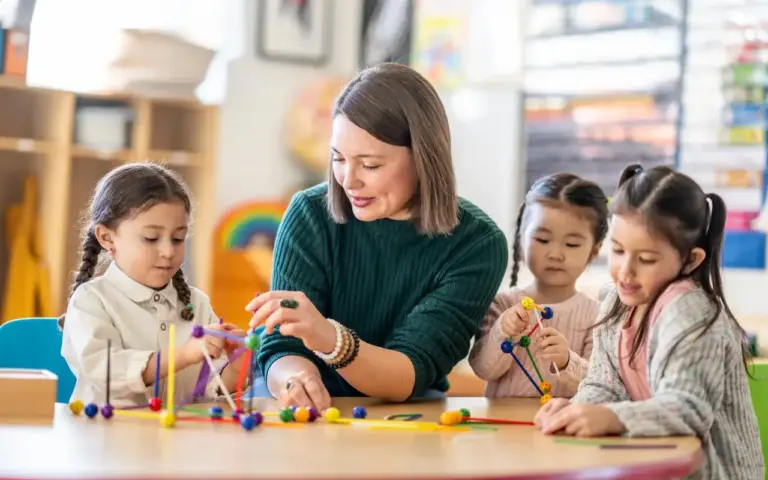
A teacher gives three simple instructions, but several pupils are still unsure what to do next. Another child knows the answer but stays quiet because they cannot find the right words. These everyday situations are common challenges in UK classrooms.
According to the UK’s Education Endowment Foundation (EEF), structured oral language interventions can support an average of six additional months of progress. This highlights the importance of helping children understand and use language effectively.
A communication-friendly classroom makes everyday lessons easier to follow by using clear instructions, visual supports, extra thinking time and different ways to communicate. These small changes can help pupils feel more confident and included.
For teachers and teaching assistants, The Teachers Training’s Speech and Language Therapy Diploma introduces children’s language development, communication difficulties and practical support approaches for inclusive classrooms.
What Is a Communication-Friendly Classroom?
A communication-friendly classroom is a learning space designed to make communication easier for all pupils, including children with speech, language and communication needs (SLCN).
According to Speech and Language UK, an effective communication environment focuses on three areas:
| Key Area | What It Means | Classroom Example |
|---|---|---|
| Physical environment | Making the classroom easier to understand and navigate | Visual timetables and clear labels |
| Adult communication | Helping pupils understand information | Short instructions and thinking time |
| Pupil participation | Giving children opportunities to communicate | Partner discussions and picture choices |
Good communication-friendly classrooms do not require expensive equipment. Small changes to everyday teaching routines can make lessons more accessible.
Why Is a Communication-Friendly Classroom Important?
Communication affects almost everything children do at school, from following instructions to making friends.
When pupils struggle to understand or express themselves, they may find classroom activities confusing or avoid taking part in discussions.

A supportive environment can help pupils:
- Understand classroom instructions more clearly.
- Ask questions and request help.
- Build confidence in group activities.
- Develop listening and verbal communication skills.
- Share ideas through speech, writing or other methods.
- Participate more independently in lessons.
The Education Endowment Foundation reports that structured oral language interventions produce an average of six additional months of progress, mainly measured through reading comprehension. This does not mean classroom layout changes alone produce the same results.
Importantly, a communication-friendly classroom supports both understanding and expression.
These skills are explained further in our related guide to receptive vs. expressive language.
How to Create a Communication-Friendly Classroom: 10 Practical Steps
Creating a communication-friendly classroom starts with understanding what makes communication difficult for pupils.
The following practical strategies can help teachers and teaching assistants make their classrooms more inclusive.

1. Reduce Unnecessary Noise and Visual Clutter
A noisy classroom can make it harder for pupils to concentrate on spoken instructions.
Background conversations, scraping chairs and excessive wall displays may create distractions.
Try these simple adjustments:
- Reduce background noise during important instructions.
- Organise classroom displays to avoid unnecessary clutter.
- Provide a quieter working area where possible.
- Position pupils so they can clearly see the teacher.
The aim is not complete silence. It is to create an environment where pupils can listen, think and communicate comfortably.
2. Use Visual Timetables and Clear Labels
Visual supports help children understand what will happen throughout the school day.
For example, a timetable showing pictures for reading, maths, lunch and playtime can make classroom routines easier to follow.
Useful visual supports include:
- Picture timetables.
- Labels on classroom resources.
- Step-by-step task cards.
- Vocabulary displays.
- Picture-based communication boards.
Use clear, consistent visuals rather than filling every wall with information.
These approaches are particularly useful when pupils find spoken instructions difficult.
3. Give Short, Clear Instructions
Long instructions can be difficult to remember, especially when several tasks are explained together.
Instead of saying:
“When you’ve finished your reading, put your book away, collect your worksheet and come to the carpet.”
Try:
“Finish reading. Put your book away. Collect your worksheet. Come to the carpet.”
Give one instruction at a time where needed, and demonstrate the task.
Clear verbal communication helps pupils understand what is expected without unnecessary confusion.
4. Allow Pupils Extra Thinking Time
Not every child can process a question and respond immediately.
Some pupils need additional time to understand what has been said, choose their words or prepare an answer.
Teachers can help by:
- Pausing after asking questions.
- Avoiding repeated instructions too quickly.
- Allowing pupils to point, write or show an answer.
- Giving time for pupils to organise their thoughts.
A child who takes longer to answer is not necessarily unwilling to participate.
The Department for Education’s 2026 speech, language and communication training highlights inclusive classroom approaches for supporting pupils with communication needs in England.
5. Model Clear Verbal Communication
Teachers provide daily examples of how language is used.
But what does verbal communication involve, and why is it important?
Verbal communication skills involve using spoken words to share information, ask questions, explain ideas and take part in conversations.
Common examples of verbal communication in the classroom include:
| Skill | Classroom Example |
|---|---|
| Asking questions | “Could you explain that again?” |
| Explaining ideas | Describing how an answer was reached |
| Taking turns | Responding during a group discussion |
| Giving instructions | Explaining a task to a partner |
| Clarifying meaning | Asking what a new word means |
These examples of verbal communication skills show how pupils use spoken language during everyday lessons.
Teachers can model these skills by speaking clearly, using familiar words and giving pupils time to respond.
However, children who cannot communicate verbally may still express themselves through gestures, signing, writing or communication aids.
6. Teach and Repeat Important Vocabulary
New vocabulary can make lessons challenging, particularly for pupils with language difficulties.
Before introducing a topic, identify a few essential words and explain them using pictures or familiar examples.
For instance, before a science lesson about plants, introduce words such as roots, stem and leaves.
Encourage pupils to use these words during activities, but avoid pressuring them to speak before they are ready.
In effective, communication-friendly classrooms, vocabulary is introduced clearly and revisited regularly.
7. Encourage Partner Talk and Small-Group Discussions
Whole-class discussions can feel overwhelming for some pupils.
Talking with one partner first may make sharing ideas easier.
Teachers can:
- Use simple discussion questions.
- Provide sentence starters.
- Give pupils clear group roles.
- Model how to listen and respond.
- Accept different ways of contributing.
When considering what are verbal communication skills, teachers should also recognise the importance of listening, turn-taking and understanding others.
Not every pupil will communicate verbally in every situation. For example, anxiety can affect speaking in particular settings.
Our guide to selective mutism in children explains how schools can support pupils who find speaking difficult because of anxiety.
A communication-friendly classroom gives every pupil meaningful opportunities to participate, whether they communicate through speech, writing, pictures or other suitable methods.
8. Offer Different Ways to Communicate
Not every pupil finds speaking easy. Some children may struggle to communicate verbally because of language difficulties, anxiety or other communication needs.
A communication-friendly classroom should offer different ways to participate, including:
- Picture cards and communication boards.
- Writing or drawing responses.
- Gestures and signing.
- Augmentative and alternative communication (AAC) devices.
These methods help pupils share ideas without relying entirely on spoken language.
9. Create Predictable Classroom Routines
Clear routines help children understand what happens next and what teachers expect.
Use visual timetables, familiar instructions and simple reminders before changing activities.
For example, show a picture of the playground before break time.
Predictable routines can reduce confusion and support pupils who find transitions difficult.
10. Work With Families and Support Staff
Building a communication-friendly classroom requires teamwork.
Teachers, teaching assistants, parents and special educational needs coordinators (SENCOs) can share useful information about each pupil’s communication needs.
When appropriate, speech and language therapists can recommend individual strategies.
Speech and Language UK highlights the importance of classroom environments, adult communication and regular opportunities for children to communicate.
Communication-Friendly Classroom Examples by Age Group
Children need different types of communication support as they grow.
| Age Group | Practical Classroom Strategies |
|---|---|
| Early years | Picture routines, songs, gestures and play-based activities |
| Primary school | Visual instructions, vocabulary displays and partner discussions |
| Secondary school | Written task steps, subject vocabulary and structured discussions |
For example, younger pupils may benefit from picture-based routines, while secondary pupils might prefer written instructions alongside spoken explanations.
Successful communication-friendly classrooms adapt these approaches to individual pupils rather than using the same method for everyone.
How to Check Whether Your Classroom Is Communication-Friendly
A simple classroom check can help teachers identify barriers and decide what to improve.

Use this checklist:
- Are instructions short and easy to understand?
- Are useful visual supports available?
- Is unnecessary background noise managed?
- Do pupils have enough thinking time?
- Can children respond without always speaking?
- Are discussions structured and inclusive?
- Are classroom strategies reviewed regularly?
For example, if pupils repeatedly misunderstand instructions, try demonstrating the task alongside shorter directions.
Effective communication: friendly classrooms are regularly reviewed to ensure adjustments meet children’s changing needs.
When Should Teachers Ask for Additional Communication Support?
Some pupils may continue experiencing difficulties despite classroom adjustments.
Teachers should consider additional support when children regularly struggle to understand instructions, express needs or participate in activities.
Start by recording specific observations and discussing concerns with the SENCO and parents or carers.
Schools may seek advice from speech and language therapy services according to local arrangements.
The Department for Education’s 2026 guidance provides evidence-informed training resources for mainstream school staff in England.
Remember that difficulties with verbal communication do not always indicate a language disorder.
How Can Speech and Language Training Support Teachers?
Understanding children’s communication needs can help education staff create more inclusive classrooms.

The Teachers Training’s Speech and Language Therapy Diploma introduces language development, speech difficulties, literacy and support approaches.
These topics may help teachers and teaching assistants recognise communication barriers and adapt activities.
The course also provides background knowledge relevant to verbal communication and classroom inclusion.
However, it does not qualify learners to practise as HCPC-registered speech and language therapists.
Final Thoughts
Creating a communication-friendly classroom does not require expensive equipment or major changes. Clear instructions, visual supports and additional thinking time can make everyday lessons more accessible.
Teachers should remember that communication involves more than speaking. Some pupils need support understanding information, while others need alternative ways to express themselves.
By reviewing classroom routines, modelling effective verbal communication and working with families and support staff, schools can build more inclusive environments.
The goal is simple: every pupil should have a meaningful opportunity to understand, participate and communicate.
Speech and Language Therapy Diploma
Frequently Asked Questions
A communication-friendly classroom helps pupils understand information, express ideas and participate through suitable communication methods. It combines clear instructions, accessible resources and supportive teaching.
Start by reducing distractions, using visual timetables, giving shorter instructions and allowing additional thinking time. Review what works for individual pupils.
If you’re wondering what verbal communication skills are, they involve using spoken language to ask questions, explain ideas and communicate information effectively.
Common examples of verbal communication skills include asking questions, describing events, explaining answers and taking turns during discussions.
Children who cannot communicate verbally may benefit from pictures, writing, gestures, signing or AAC. Teachers should follow individual communication plans and provide meaningful participation opportunities.
0 responses on "How to Create a Communication-Friendly Classroom"