

Hearing your child pronounce “sun” as “thun” might make you wonder whether they need help with their speech. Lisps are relatively common in childhood, and some resolve naturally as speech develops. Others may benefit from professional support.
If you’re wondering how to help a child with a lisp, start by listening patiently, modelling words naturally and encouraging communication without constant correction. At school, teachers can help by creating a supportive environment where children feel comfortable speaking.
This guide explains practical ways to support a child with a lisp at home and school, what to avoid and when to seek advice from a speech and language therapist.
Supporting Children’s Speech and Communication Development
For teachers, teaching assistants and parents interested in children’s communication, Teachers Training offers a Speech and Language Therapy Diploma. This online course introduces speech and language development and related support approaches. It is educational training, not a qualification to practise as a registered speech and language therapist.
Support children's communication
Online Speech and Language Therapy Diploma.
View the diploma Educational training, not a practising qualification.What Is a Lisp in Children?
A lisp is a speech-sound difference that affects how certain sounds are pronounced, particularly /s/ and /z/. A child might say “thun” instead of “sun” because their tongue moves between their front teeth when producing the sound.
According to Speech and Language UK’s guidance on lisps, lisps can occur during childhood, and some resolve without treatment.
Two commonly discussed types are:
- Frontal or interdental lisp: The tongue moves between the front teeth, making an /s/ sound more like “th”.
- Lateral lisp: Air escapes around the sides of the tongue, producing a less clear or slushy sound.
A lisp affects how particular sounds are produced, whereas other communication patterns, such as echolalia, involve repeating words or phrases and may have different support needs.
What Causes a Child to Have a Lisp?
There is no single established cause of a lisp. Some children develop a different pattern of tongue movement when producing particular sounds, while others may have speech-sound difficulties that require individual assessment.
Although dental development, tongue position and childhood habits are sometimes discussed as possible influences, these should not automatically be treated as causes.
Parents should avoid blaming themselves or assuming that a particular habit caused their child’s pronunciation.
The most useful approach is to observe how the child communicates, support their confidence and seek professional advice if concerns persist.
How to Help a Child With a Lisp at Home
Helping a child with a lisp does not mean correcting every word they pronounce differently. Everyday conversations, supportive responses and enjoyable communication activities can help children feel confident while their speech develops.
Here are four practical approaches.
1. Listen to What Your Child Says, Not Just How They Say It
Children need to feel that their words matter, even when their pronunciation is unclear.
When your child speaks, focus on their message rather than immediately correcting individual sounds.
Avoid interrupting frequently or asking them to repeat difficult sounds several times. Repeated correction can make ordinary conversations feel like tests.
2. Model Words Naturally Without Repeated Correction
Natural speech modelling means saying a word clearly during conversation without demanding that the child imitate it.
For example:
Child: “Look at my thock!”
Adult: “Yes, that’s your sock! It’s a lovely blue sock.”

The adult provides a clear pronunciation while keeping the conversation positive.
This approach allows children to hear accurate speech sounds without feeling pressured.
Remember that modelling is a supportive communication strategy, not a guaranteed treatment for a lisp.
3. Use Everyday Conversation, Reading and Play
Shared activities create opportunities for children to hear language and communicate comfortably.
You could:
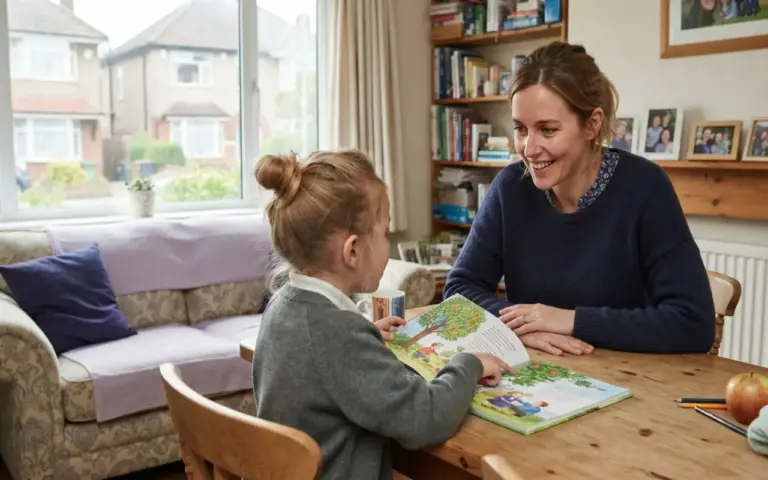
- Read picture books together and talk about the illustrations.
- Describe objects during play or everyday routines.
- Ask open-ended questions about your child’s interests.
- Play simple naming games without insisting on perfect pronunciation.
- Give your child enough time to finish speaking.
For example, while reading a story about animals, you might naturally emphasise familiar words such as “sun”, “snake” or “sand”.
The aim is enjoyable communication rather than intensive pronunciation practice.
4. Keep Speech Practice Positive and Pressure-Free
Some children benefit from specific articulation activities, but these should suit their individual speech needs.
Online resources sometimes recommend mirrors, tongue-position exercises or repeated /s/ sounds. However, different lisp patterns may require different approaches.
If a speech and language therapist has recommended exercises, follow their instructions about how and when to practise.
Otherwise, focus on natural communication, encouragement and maintaining your child’s confidence.
The goal is to help children communicate comfortably, not make every conversation a speech lesson.

How Teachers Can Support a Child With a Lisp at School
Children with lisps may participate confidently in lessons, while others feel uncomfortable speaking aloud. Teachers and teaching assistants can make a difference through simple, inclusive approaches.
Build Confidence During Classroom Communication
A supportive classroom allows children to contribute without worrying about how every word sounds.
Teachers can:
- Listen patiently and avoid finishing sentences unnecessarily.
- Respond to the child’s ideas rather than focusing on pronunciation.
- Avoid drawing public attention to speech differences.
- Provide comfortable opportunities for discussion and participation.
- Address teasing or unkind comments promptly.

These approaches support creating a communication-friendly classroom where pupils feel respected.
Work With Parents and Speech and Language Therapists
Consistent communication between home and school can help adults respond appropriately.
Example: A parent tells the class teacher that their child feels uncomfortable saying certain words during reading activities. The teacher agrees not to single out the child’s pronunciation, provides opportunities to participate comfortably and follows any recommendations supplied by the child’s speech and language therapist. The parent and teacher then share observations about the child’s confidence and participation.

If a therapist has suggested activities, school staff should follow the agreed guidance rather than introduce additional articulation exercises independently.
Speech and Language UK’s guidance for educators provides further information about supporting children with lisps.
Education professionals interested in broader inclusive classroom support may also consider Teachers Training’s SEN Teaching Assistant course. This develops relevant educational knowledge but does not qualify someone to deliver clinical speech therapy.
Will a Child Grow Out of a Lisp?
Some children naturally develop clearer pronunciation as they grow. According to Speech and Language UK, certain childhood lisps may resolve without treatment, often around four or five years of age. However, speech development varies, and this is not a fixed deadline. Some children may benefit from earlier professional advice depending on their speech pattern and individual needs.
A child with a frontal lisp may have different support needs from one with a lateral lisp. Their age, speech development and communication confidence can also influence the advice provided.
If you are unsure, seeking advice is reasonable.
Support children's communication
Online Speech and Language Therapy Diploma.
View the diploma Educational training, not a practising qualification.When Should You Seek Speech and Language Therapy?
A speech and language therapist (SLT) can assess a child’s speech sounds and recommend support suited to their individual needs.
Signs That Professional Advice May Help
Consider seeking advice if:
- Your child’s lisp persists and you are concerned about their speech development.
- Their speech is frequently difficult for unfamiliar listeners to understand.
- They become upset or avoid speaking because of their pronunciation.
- You notice additional speech or communication difficulties.
- A teacher or early years practitioner raises concerns about speech clarity.
These signs do not automatically indicate a speech disorder. They suggest that professional guidance may be useful.
Some children have more complex speech difficulties involving planning or coordinating speech movements. The signs of childhood apraxia of speech are different from those of an isolated lisp.
How to Access Support in the UK
In the UK, parents concerned about their child’s speech can contact their local NHS children’s speech and language therapy service or speak with a health visitor, GP or school SENCO.
Referral arrangements vary between NHS services. Some areas accept referrals directly from parents, while others have different procedures or eligibility criteria. Check your local NHS service’s published guidance before applying, and seek advice if you are unsure which pathway is appropriate.
A speech and language therapist may assess how a child produces particular sounds, how clearly they communicate and whether individualised intervention is appropriate.
For an example of specialist speech-sound guidance, Alder Hey Children’s NHS Foundation Trust provides NHS advice on producing the /s/ sound.
What Should Adults Avoid When Helping a Child With a Lisp?
Good intentions can sometimes lead adults to place unnecessary pressure on children.
When supporting a child with a lisp, avoid:
- Constant correction: Repeatedly asking children to pronounce words again.
- Imitating their speech: Copying a lisp for amusement or drawing attention to it.
- Public criticism: Correcting pronunciation in front of classmates.
- Unsupervised therapy drills: Assuming online exercises suit every child.
- Comparisons: Measuring a child’s speech against siblings or classmates.
It is also important to distinguish lisps from other communication difficulties.
For example, supporting children with selective mutism involves different considerations because selective mutism concerns difficulty speaking in particular situations, rather than producing specific speech sounds.
Final Thoughts: Supporting Your Child's Speech With Confidence
Knowing how to help a child with a lisp begins with patience, encouragement and realistic expectations.
Listen to what your child wants to communicate, model words naturally and avoid making pronunciation the focus of every interaction. Teachers can reinforce this support through respectful classroom practices.
Some lisps resolve as children develop, while others benefit from professional guidance. When concerns arise, a speech and language therapist can help identify the most appropriate next steps.
Frequently Asked Questions
Can You Fix a Lisp in a Child?
Some childhood lisps resolve naturally, while others may improve with appropriate speech and language therapy. Whether intervention is needed depends on the child’s speech pattern, development and individual circumstances. A qualified therapist can assess the difficulty and recommend suitable support.
Can Parents Try Lisp Exercises at Home?
Parents can encourage communication through reading, conversation and natural speech modelling. However, targeted articulation exercises should ideally follow professional advice. Different lisps may require different techniques, and unsuitable practice may not address the child’s particular difficulty.
Is It Normal for a Three-Year-Old Not to Speak Clearly?
Speech-sound development continues throughout early childhood, so some pronunciation differences are expected at three. However, persistent difficulties, limited intelligibility or broader communication concerns deserve attention. Parents can contact a health visitor or speech and language therapist for individual guidance.

0 responses on "How to Help a Child With a Lisp"