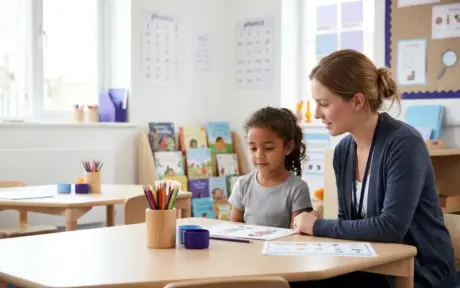

A child may chat happily at home, tell stories to their family and play confidently with siblings, yet remain completely silent when their teacher asks a question. This can be confusing for adults who know the child can speak.
Selective mutism is an anxiety-related condition in which a child cannot speak in certain social situations, despite being able to speak in others. It often becomes noticeable when children begin nursery or school. The difficulty is not a deliberate refusal to communicate, and appropriate support focuses on reducing speaking-related anxiety.
For teachers and teaching assistants, recognising the signs is an important first step. With patience, appropriate communication strategies and cooperation between home and school, children can receive support that reduces anxiety and helps them participate more comfortably.
Supporting Children’s Communication Through Professional Development
Teachers and school support staff who want to build their knowledge of speech, language and communication difficulties can consider the Speech and Language Therapy Diploma from Teachers Training.
The course offers an online professional development option. It does not, by itself, qualify someone to practise as an HCPC-registered speech and language therapist.
Table of Contents
What Is Selective Mutism?
Selective mutism is a persistent difficulty speaking in particular social situations where speech is expected. A child might talk naturally with family members but be unable to answer questions at school, speak to unfamiliar adults or communicate during group activities.
The word selective refers to the situations in which speaking becomes difficult. It does not mean the child is deliberately choosing when to speak.
How Selective Mutism Affects Speaking
Children with selective mutism can usually speak in some situations, but anxiety may prevent them from speaking in others. Some children remain completely silent in particular settings, while others may whisper, use occasional words or communicate with only a small number of trusted people.
For example, a six-year-old may talk enthusiastically about a school project at home but remain silent when asked to describe it in class. Even when the child knows the answer, the expectation to speak can create considerable distress.
Some children communicate through gestures or facial expressions. Others become very still, avoid eye contact or struggle to respond at all.
These reactions should not automatically be interpreted as rudeness, defiance or a lack of knowledge.
At What Age Does Selective Mutism Begin?
Selective mutism often begins in early childhood, with signs commonly becoming apparent when children enter nursery or primary school.
Before starting school, a child’s communication may appear typical because most conversations take place with familiar people.
The difficulties can become more noticeable when the child encounters unfamiliar adults, larger groups and new social expectations.
However, not every quiet child has selective mutism. Persistent difficulties that interfere with everyday communication deserve careful attention.
Speech and Language Therapy Diploma
Signs of Selective Mutism in Children
The signs of selective mutism vary between children, but a consistent difference in speaking ability across situations is a key indicator. Teachers should pay attention to how a child communicates with familiar people compared with unfamiliar adults or larger groups.
Common Signs at Home and School
Possible signs include:
- Speaking comfortably at home but rarely or never speaking at school.
- Becoming tense, frozen or unusually still when expected to talk.
- Struggling to answer questions despite knowing the answers.
- Communicating through nodding, pointing or gestures instead of speech.
- Finding it difficult to ask for help or express basic needs.
- Speaking to familiar friends but not teachers or unfamiliar adults.
- Appearing distressed when attention is directed towards their speaking.
These behaviours may occur alongside other signs of anxiety, although every child’s experience is different.
The Alder Hey NHS guidance on signs of selective mutism in children provides further information about recognising communication difficulties and offering appropriate support.
What Selective Mutism Can Look Like in the Classroom
Consider three everyday situations.
During registration: A pupil knows their name but cannot say “here” when the teacher calls it.
During lessons: A child completes written activities accurately but cannot answer questions aloud, even when confident about the subject.
During breaktime: A pupil needs to use the toilet but cannot ask an unfamiliar member of staff for permission.
These examples show why selective mutism can affect more than verbal participation. It may influence a child’s independence, comfort and ability to communicate essential needs.
Teachers should observe patterns across different situations rather than treating individual incidents as evidence of a diagnosis.

What Causes Selective Mutism?
Selective mutism is closely associated with anxiety. There is no single explanation that applies to every child, and several factors may contribute to its development.
Anxiety and Situational Triggers
Children with selective mutism may experience intense anxiety when speaking is expected in particular social environments.
Possible triggers include:
- Being asked questions in front of classmates.
- Speaking to unfamiliar teachers or adults.
- Entering a new classroom or school.
- Participating in activities where everyone must speak.
- Becoming the centre of attention during conversations.
For some children, even a friendly question can feel overwhelming when they are already anxious about speaking.
This does not mean teachers should stop communicating with the child. Instead, communication should be adapted to reduce pressure while supporting gradual progress.
Is Selective Mutism Caused by Shyness or Parenting?
Selective mutism is not the same as ordinary shyness.
A shy child may initially hesitate to speak but gradually become more comfortable as they settle into an unfamiliar environment. A child with selective mutism may remain unable to speak in particular situations despite becoming familiar with the people around them.
It is also incorrect to assume that selective mutism results from poor parenting or that trauma is always responsible.
Parents should not be blamed for their child’s communication difficulties. A supportive, coordinated approach is more constructive than searching for someone to blame.
Selective Mutism, Autism and Other Communication Difficulties
Selective mutism can sometimes be confused with other developmental or communication difficulties. Recognising the distinctions helps teachers describe concerns accurately and seek appropriate professional advice.
Is Selective Mutism a Form of Autism?
No. Selective mutism and autism are different conditions, although they can occur together.
Selective mutism involves difficulty speaking in particular situations, closely associated with anxiety.
Autism is a neurodevelopmental condition that can affect social communication, sensory processing and patterns of behaviour.
An autistic child may also experience selective mutism, but neither condition automatically indicates the presence of the other.
If a child has wider communication or developmental difficulties, a professional assessment can help identify their individual needs.
How Is It Different From Speech and Language Difficulties?
Selective mutism primarily concerns the ability to speak in certain situations rather than a general inability to produce or comprehend language.
However, some children may also have speech or language difficulties.
For example, difficulties with receptive and expressive language skills can affect how children comprehend spoken information or express their thoughts.
Similarly, childhood speech motor difficulties involve challenges planning or coordinating the movements needed for speech.
Other communication differences include speech sound difficulties, such as a lisp, and echolalia, which involves repeating words or phrases.
These are separate topics. Teachers interested in supporting children with speech sound difficulties can consult the relevant guidance.
Likewise, recognising repeated speech in children may help staff describe communication patterns more accurately.
A child may experience more than one difficulty, so assumptions based on silence alone should be avoided.
How Is Selective Mutism Diagnosed?
Selective mutism is diagnosed through a professional assessment of a child’s communication difficulties, their circumstances and the situations in which they can or cannot speak.
Who Can Assess Selective Mutism?
Assessment may involve appropriately qualified professionals, including speech and language therapists, psychologists or other relevant clinicians.
Information from parents and teachers is particularly useful because a child may communicate differently across environments.
Assessment also considers whether the difficulty is persistent, whether it affects everyday functioning and whether another communication difficulty could better explain the child’s presentation. Professionals should take account of the child’s language background, particularly when they are adjusting to an unfamiliar language or educational environment.
Professionals may consider:
- Where the child speaks comfortably.
- Situations in which speech becomes difficult.
- How long the difficulties have continued.
- Whether anxiety affects communication.
- Whether other speech, language or developmental needs are present.
Teachers are not responsible for making a diagnosis. Their role is to record relevant observations, communicate with parents and contribute to appropriate support arrangements.
How Can Schools Help a Child With Selective Mutism?
Schools can support children with selective mutism by reducing pressure to speak, providing alternative communication methods, building trusting relationships and working closely with families and relevant professionals.
The aim is to help children participate comfortably while supporting gradual communication progress through an individualised approach. Teachers should avoid forcing speech or interpreting silence as deliberate disobedience.
Create a Calm, Low-Pressure Environment
Children with selective mutism may become more anxious when they feel watched or expected to respond verbally.
Teachers can help by allowing time for the child to settle, speaking naturally and avoiding repeated demands for answers.
For example, instead of asking, “Why won’t you tell me?”, a teacher might say, “You can show me which one you’d like.”
Building a trusting relationship is particularly important. Familiar routines, consistent staff and predictable activities can help children feel more secure.
Schools can also use broader communication-friendly classroom strategies to make participation accessible to different learners.
Offer Different Ways to Communicate
Speech is not the only way children can demonstrate their knowledge or communicate their needs.
Depending on the child’s circumstances, teachers might allow:
- Pointing to pictures or written choices.
- Nodding or using agreed gestures.
- Writing answers instead of speaking.
- Showing completed work to demonstrate understanding.
- Using communication cards to request help.

These alternatives can reduce immediate anxiety and allow children to participate.
However, they should be considered alongside any agreed plan for developing communication, rather than automatically becoming permanent substitutes for speech.
Some children with additional language needs may benefit from broader language-development activities, including visual sentence-building strategies.
Such activities may support language skills where needed, but they are not treatments for selective mutism itself.
Support Participation Through Small, Manageable Steps
Progress often begins with helping a child feel comfortable participating before expecting verbal responses.
A child might initially join an activity without speaking, then communicate through gestures or interact more comfortably with a trusted adult.
Where appropriate, professionals may recommend a carefully planned approach that gradually introduces speaking opportunities.
Teachers can support agreed goals by keeping activities predictable and avoiding sudden demands to speak publicly.
For example, a child who communicates comfortably with one familiar adult may eventually be supported to participate with another adult, following an individualised plan.
Progress should be recognised sensitively. Public celebrations of speaking can sometimes create unwanted attention and additional anxiety.
Classroom example: Supporting participation without demanding speech
A Year 2 pupil completes written work confidently but becomes silent when asked questions aloud. Instead of repeatedly requesting a verbal answer, the teacher allows the pupil to point to their chosen response or show their work.
The teacher also agrees a discreet way for the pupil to request help. As the child becomes more comfortable, the school works with the family and relevant professionals to support gradual communication goals.
The aim is to maintain participation while reducing speaking-related anxiety, rather than expecting immediate verbal responses.

Work With Parents, Carers and the SENCO
Parents often see a different side of a child’s communication. A pupil who rarely speaks at school may be highly talkative at home.
Regular communication between families and school staff can therefore provide valuable information.

Teachers can discuss:
- Situations where the child appears comfortable communicating.
- Activities that seem to increase anxiety.
- Communication methods the child already uses.
- Adjustments that could support classroom participation.
- Changes in confidence or communication over time.
In England, the school’s special educational needs coordinator (SENCO) helps coordinate support for pupils with special educational needs. Where selective mutism affects a child’s access to education, the teacher and SENCO can consider appropriate support, work with parents and seek specialist advice when needed. A formal diagnosis is not always required before a school begins providing suitable SEN support.
The Department for Education’s SEND code of practice sets out statutory guidance for relevant organisations in England.
Schools elsewhere in the UK should follow the applicable guidance and legislation for their nation.
Support should be reviewed regularly, with the child’s wellbeing, privacy and individual circumstances kept central to decisions.
Prepare for Transitions and Unfamiliar Situations
Changes in routine can be particularly challenging for children who experience anxiety about speaking.
Moving into a new classroom, meeting an unfamiliar teacher or starting a different school may introduce additional communication demands.
Schools can make transitions more manageable by:
- Introducing new staff gradually.
- Arranging familiarisation visits where possible.
- Explaining routines before changes occur.
- Sharing agreed communication strategies with relevant staff.
- Maintaining access to a trusted adult when appropriate.
For example, before moving into a new class, a pupil might visit the classroom with a familiar teaching assistant and participate in a quiet activity.
These arrangements cannot guarantee that anxiety will disappear, but they may help children approach unfamiliar situations with greater confidence.
What Should Teachers Avoid When Supporting Selective Mutism?
Well-intentioned responses can sometimes increase a child’s anxiety. Teachers should therefore consider not only what they say but also how much pressure their approach creates.
| Avoid | Instead |
|---|---|
| Insisting that a child answers aloud. | Offer an appropriate alternative response. |
| Punishing or criticising silence. | Respond calmly and without judgement. |
| Repeatedly questioning a distressed child. | Allow time and reduce immediate demands. |
| Publicly celebrating unexpected speech. | Acknowledge progress discreetly. |
| Assuming silence means defiance. | Consider anxiety and communication needs. |
| Automatically speaking for the child. | Follow an agreed, individualised support approach. |
One important principle is to avoid making speaking the centre of attention.
A child who manages to say a word after weeks of silence may already feel extremely self-conscious. An enthusiastic public reaction could make future speaking attempts more difficult.
Equally, adults should not assume that avoiding all speaking opportunities indefinitely is the best solution.
The appropriate balance involves reducing pressure while supporting gradual, professionally guided progress.
Treatment and Professional Support for Selective Mutism
Selective mutism can improve with appropriate support. Treatment focuses on reducing the anxiety associated with speaking rather than simply encouraging children to talk more. A coordinated approach involving families, schools and relevant professionals can help children develop communication confidence gradually.
What Treatments Can Help?
Behavioural approaches and cognitive behavioural therapy (CBT) are among the treatments used for selective mutism.
Depending on the child’s needs, professionals may recommend techniques such as graded exposure, stimulus fading and shaping. These approaches gradually help children become more comfortable communicating in situations that previously caused anxiety.
Teachers can support agreed strategies by creating a calm classroom environment, reducing speaking pressure and recognising different forms of communication. However, structured therapeutic interventions should be planned with appropriate professional guidance rather than introduced independently without suitable training.
When Should Parents Seek Professional Advice?
Parents should seek advice when a child’s speaking difficulties persist or affect their education, relationships or everyday communication.
A teacher, SENCO or GP can be a useful starting point. NHS speech and language therapy services, psychologists or other relevant specialists may also be involved, depending on local arrangements.
Schools can help by sharing observations and working with families to provide consistent support.
Can Children Grow Out of Selective Mutism?
Some children experience substantial improvement, particularly when their difficulties are recognised and appropriate support is provided.
However, selective mutism should not simply be treated as a phase that every child will eventually outgrow.
Without suitable support, communication difficulties may continue and affect school participation, friendships or confidence.
The length of time needed for improvement varies. A child’s age, individual needs, circumstances and access to appropriate support can all influence progress.
The most helpful approach is to recognise persistent difficulties early, reduce unnecessary speaking pressure and seek professional advice when appropriate.
Conclusion
Selective mutism in children requires understanding, patience and appropriate support. Teachers can help by recognising possible signs, reducing speaking pressure and creating opportunities for comfortable participation.
When schools, families and professionals work together, children are better supported in developing communication confidence at their own pace.
Frequently Asked Questions About Selective Mutism
Yes. Many children with selective mutism speak comfortably with family members or trusted friends but struggle to speak in particular social settings, including school.
Selective mutism may be considered a disability under the Equality Act 2010 if it meets the legal definition, including a substantial and long-term adverse effect on normal day-to-day activities. A diagnosis alone does not automatically establish legal disability status. The Equality Act applies in England, Scotland and Wales; Northern Ireland has separate disability discrimination legislation.
Yes. Difficulty answering questions, requesting help or participating verbally can affect learning opportunities and classroom experiences. Appropriate adjustments can help children demonstrate their abilities.
Teachers can build trusting relationships, use predictable routines, offer alternative communication methods and follow individualised support plans developed with parents and relevant professionals.